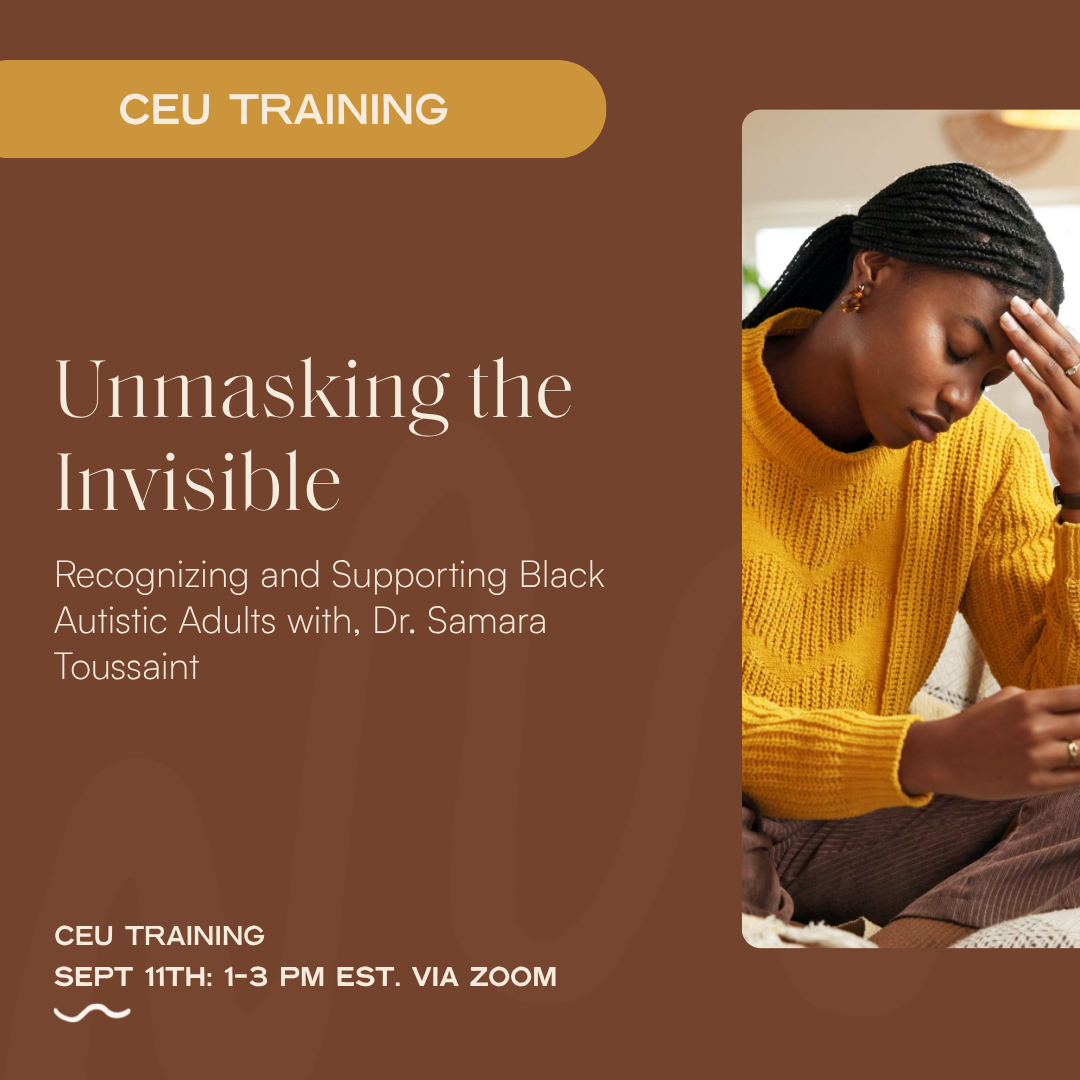
Unmasking the Invisible: Recognizing and Supporting Black Adults

from $89.00

Sept 11th 1:00-3:00pm EST, conducted online via Zoom

This training centers a reality that continues to be overlooked: Black autistic adults, particularly those diagnosed later in life, are not simply missed; they are consistently misinterpreted, dismissed, and harmed within both educational and mental health systems. Research indicates that up to 79% of autistic adults meet criteria for at least one co-occurring psychiatric condition (Lever & Geurts, 2016). This statistic points to something deeper than individual pathology and highlights the cumulative impact of chronic stress, systemic neglect, racial bias, and limited access to effective, culturally responsive mental health care. These factors shape not only diagnosis, but long-term well-being. We will examine how educational trauma, racial bias, and systemic neglect intersect to shape the lived experiences of Black autistic individuals whose needs were minimized, mislabeled, or completely ignored in childhood.

From being disciplined instead of supported, to having parental concerns dismissed, participants will explore how these patterns contribute to misdiagnosis, chronic invalidation, and delayed access to care. This training will also provide guidance on how to identify and support Autistic adults who have masked and continue to mask in spaces not built for them. A qualitative study of autistic adults found that prolonged masking was “damaging for mental health” and linked to feelings of not belonging and increased suicidality (Bradley et al., 2021). Additionally, we will explore the impacts of social camouflaging (e.g., behaviors Autistic persons adopt in order to fit in like forced eye contact). Social camouflaging has been found to have many positive and negative consequences for autistic adults (Summerill & Summers, 2025).

This workshop centers the psychological cost of survival and how we can help Black Autistic Adults move forward and heal, specifically: The burden of masking (camouflaging) and its long-term impact The grief that comes with late diagnosis and lost identity development The harm caused by non-adapted therapeutic approaches like traditional CBT and what it actually looks like to provide neuroaffirming, culturally competent support for Autistic Adults.

Participants will walk away with:

  • A deeper understanding of racialized educational, healthcare, and wellness trauma

  • A framework for recognizing masking and supporting safe unmasking

  • Tools to adapt therapy beyond traditional CBT Strategies for processing grief in late-diagnosed clients

Learning Objectives:

  • Analyze and define educational and systemic trauma, with attention to mental health care disparities, and their long-term effects on academic performance, occupational opportunities, and quality of life.

  • Examine systemic biases and racial disparities, including how implicit bias and racial stereotypes contribute to the misdiagnosis and underidentification of Black autistic individuals when they seek mental health support.

  • Recognize and assess masking and camouflaging behaviors in Black autistic individuals, including how these strategies develop as responses to systemic pressure, bias, and the need for safety.

  • Critically examine how traditional treatment approaches, including standard CBT, can unintentionally reinforce masking, invalidate lived experiences, and contribute to harm when not adapted to be neuroaffirming and culturally responsive.

Cultivating Healers seeks to provide educational and engaging CEUs with liberatory information, pop-quizzes, and case studies to ensure your learning.

This training is eligible for 2 Continuing Education Credits for NBCC Counselors & NY LMHCs, LCSWs, and LMSWs. Cultivating Healers is approved by the American Psychological Association (APA) to sponsor continuing education for psychologists.

Rate Type:

Sept 11th 1:00-3:00pm EST, conducted online via Zoom

This training centers a reality that continues to be overlooked: Black autistic adults, particularly those diagnosed later in life, are not simply missed; they are consistently misinterpreted, dismissed, and harmed within both educational and mental health systems. Research indicates that up to 79% of autistic adults meet criteria for at least one co-occurring psychiatric condition (Lever & Geurts, 2016). This statistic points to something deeper than individual pathology and highlights the cumulative impact of chronic stress, systemic neglect, racial bias, and limited access to effective, culturally responsive mental health care. These factors shape not only diagnosis, but long-term well-being. We will examine how educational trauma, racial bias, and systemic neglect intersect to shape the lived experiences of Black autistic individuals whose needs were minimized, mislabeled, or completely ignored in childhood.

From being disciplined instead of supported, to having parental concerns dismissed, participants will explore how these patterns contribute to misdiagnosis, chronic invalidation, and delayed access to care. This training will also provide guidance on how to identify and support Autistic adults who have masked and continue to mask in spaces not built for them. A qualitative study of autistic adults found that prolonged masking was “damaging for mental health” and linked to feelings of not belonging and increased suicidality (Bradley et al., 2021). Additionally, we will explore the impacts of social camouflaging (e.g., behaviors Autistic persons adopt in order to fit in like forced eye contact). Social camouflaging has been found to have many positive and negative consequences for autistic adults (Summerill & Summers, 2025).

This workshop centers the psychological cost of survival and how we can help Black Autistic Adults move forward and heal, specifically: The burden of masking (camouflaging) and its long-term impact The grief that comes with late diagnosis and lost identity development The harm caused by non-adapted therapeutic approaches like traditional CBT and what it actually looks like to provide neuroaffirming, culturally competent support for Autistic Adults.

Participants will walk away with:

  • A deeper understanding of racialized educational, healthcare, and wellness trauma

  • A framework for recognizing masking and supporting safe unmasking

  • Tools to adapt therapy beyond traditional CBT Strategies for processing grief in late-diagnosed clients

Learning Objectives:

  • Analyze and define educational and systemic trauma, with attention to mental health care disparities, and their long-term effects on academic performance, occupational opportunities, and quality of life.

  • Examine systemic biases and racial disparities, including how implicit bias and racial stereotypes contribute to the misdiagnosis and underidentification of Black autistic individuals when they seek mental health support.

  • Recognize and assess masking and camouflaging behaviors in Black autistic individuals, including how these strategies develop as responses to systemic pressure, bias, and the need for safety.

  • Critically examine how traditional treatment approaches, including standard CBT, can unintentionally reinforce masking, invalidate lived experiences, and contribute to harm when not adapted to be neuroaffirming and culturally responsive.

Cultivating Healers seeks to provide educational and engaging CEUs with liberatory information, pop-quizzes, and case studies to ensure your learning.

This training is eligible for 2 Continuing Education Credits for NBCC Counselors & NY LMHCs, LCSWs, and LMSWs. Cultivating Healers is approved by the American Psychological Association (APA) to sponsor continuing education for psychologists.

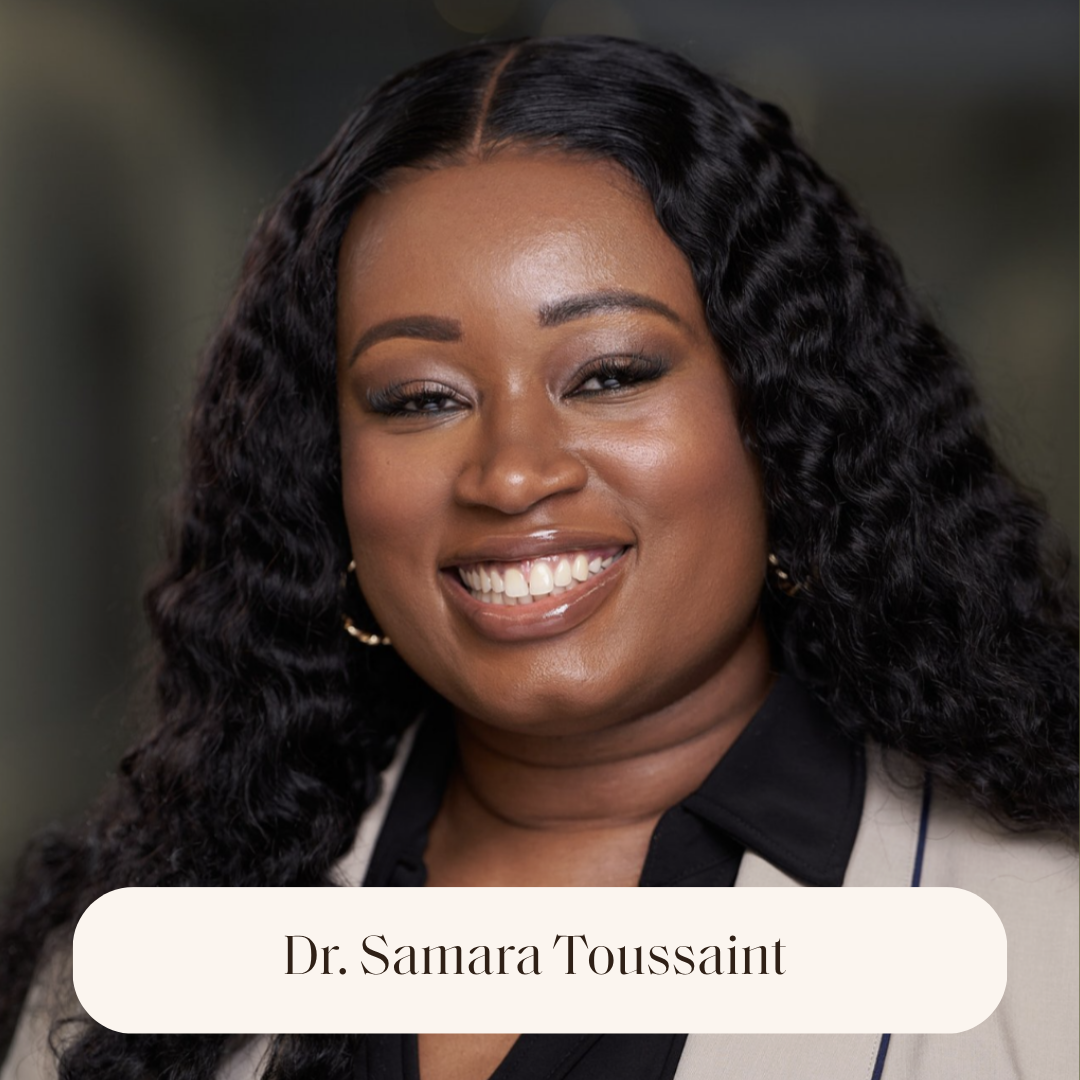
  • Dr. Samara Toussaint is a sought-after psychologist, speaker, and advocate dedicated to empowering neurodivergent individuals and their families to thrive in a world that often overlooks their unique needs. Specializing in neurodiversity functioning, she helps individuals navigate challenges, improve executive functioning, and foster resilience in all aspects of life. Through her work as a certified school psychologist and neurodiversity coach, Dr. Toussaint takes a holistic approach to support, ensuring that children and adults alike have a voice in shaping their routines, addressing challenges, and building stronger connections. She believes that true, lasting change doesn’t happen in isolation—it requires a collaborative effort that includes individuals, families, and communities working together to create meaningful support systems. Dr. Toussaint’s expertise has been recognized nationally through her impactful talks, workshops, and media features. Her insights on mental health, executive functioning, and neurodivergence have been showcased in the American Psychological Association, Refinery29, Allure, AARP, Yahoo News, Black Female Therapists, and The Black Doctoral Network, among others. Committed to making mental health care more accessible, she provides actionable strategies that help individuals embrace their neurodivergence, improve communication, and create sustainable paths forward. Her work continues to inspire growth, connection, and self-advocacy, particularly within diverse and immigrant communities.

  • Kenya Crawford, LMHC is recognized by the New York State Education Department's State Board for Mental Health Practitioners as an approvedprovider of continuing education for licensed mental health counselors. #MHC-0269. Kenya Crawford, LMHC is recognized by the New York State Education Department's State Board for Social Work as an approved provider of continuing education for licensed social workers #SW-0736.

    Kenya Crawford, LLC has been approved by NBCC as an Approved Continuing Education Provider, ACEP No. 7470.
    Cultivating Healers is approved by the American Psychological Association (APA) to sponsor continuing education for psychologists. Cultivating Healers maintains responsibility for this program and its content.

    To be eligible for Continuing Education Units (CEUs), participants must attend the training in its entirety. Individuals who arrive late or depart early will not qualify for CEU credit.

    Want to seek your company’s financial support? Check out our request template to make the ask, and sign up using the organizational rate.

  • Due to the nature of this product, all sales are final and we are unable to offer refunds. If you are no longer able to attend a group, email us at info@kenyacrawford.com and we can transfer your confirmation to the following group.

  • If you are no longer able to attend a scheduled training or group session, you may request a one-time transfer to a future session of the same group or training.


    To request a transfer: Email info@kenyacrawford.com with your name, order confirmation number, and the session you originally registered for. Indicate which future session you would like to transfer your confirmation to. Requests must be made at least 48 hours before the session start date to be eligible for transfer.


    Transfers are subject to availability and must be used within six months of the original purchase date. For any additional questions regarding this policy, please contact us at info@kenyacrawford.com